

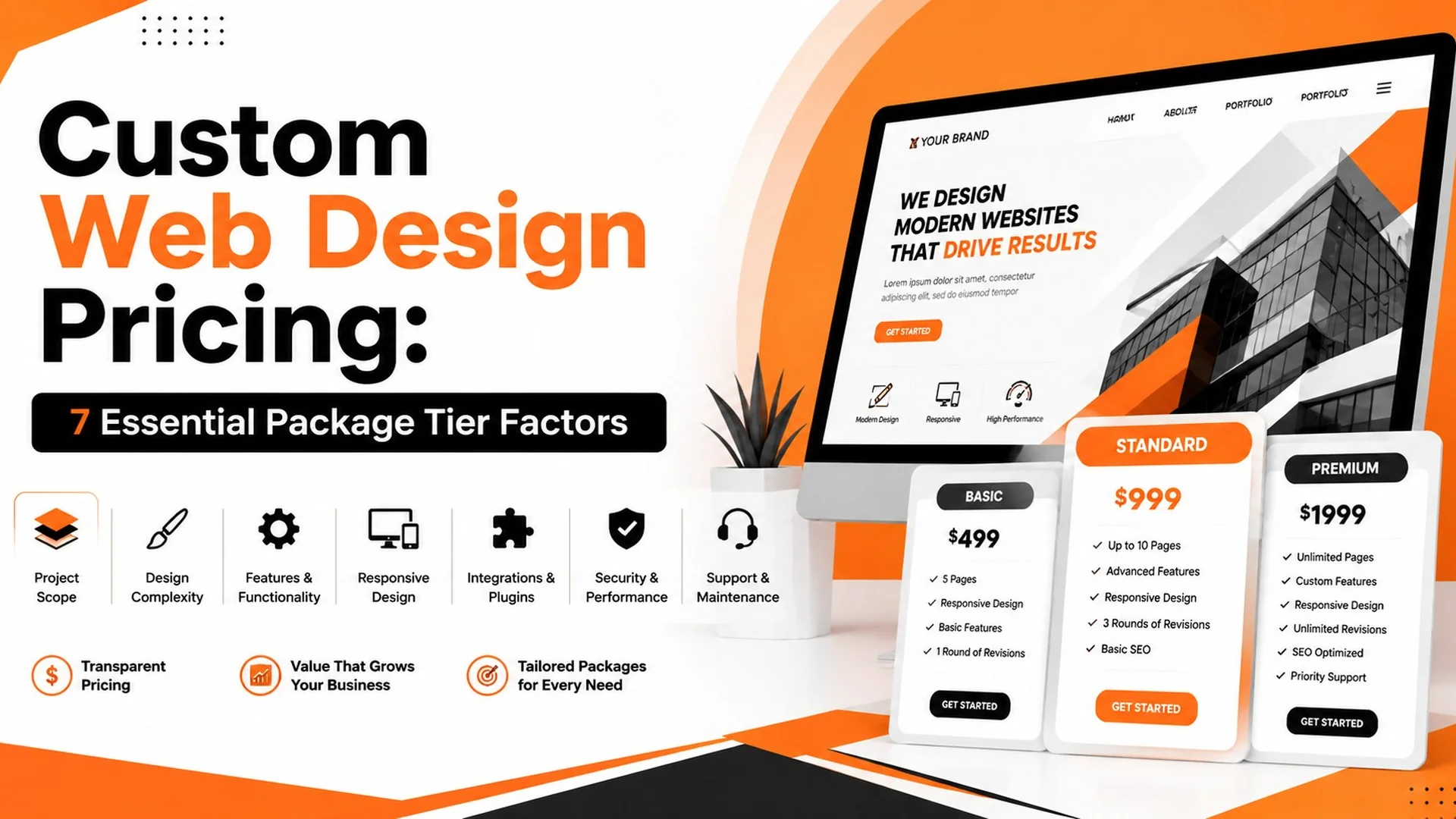
Navigating custom web design pricing can feel confusing because agencies use different project scopes, technical stacks, and deliverable tiers. A tailored website requires strategic planning, custom UI/UX design, modular frontend coding, and technical search engine optimization. Understanding how development agencies build their proposals empowers you to invest wisely and avoid hidden charges.
Building a digital footprint is an operational investment rather than a simple administrative cost. Businesses that choose custom development gain full control over site performance, brand architecture, conversion paths, and search indexing. Reviewing exact package structures helps you evaluate quotes accurately before signing a contract.
If you want a detailed financial baseline for specialized builds, check out our comprehensive custom web development cost guide.
Understanding Custom Web Design Pricing Tiers
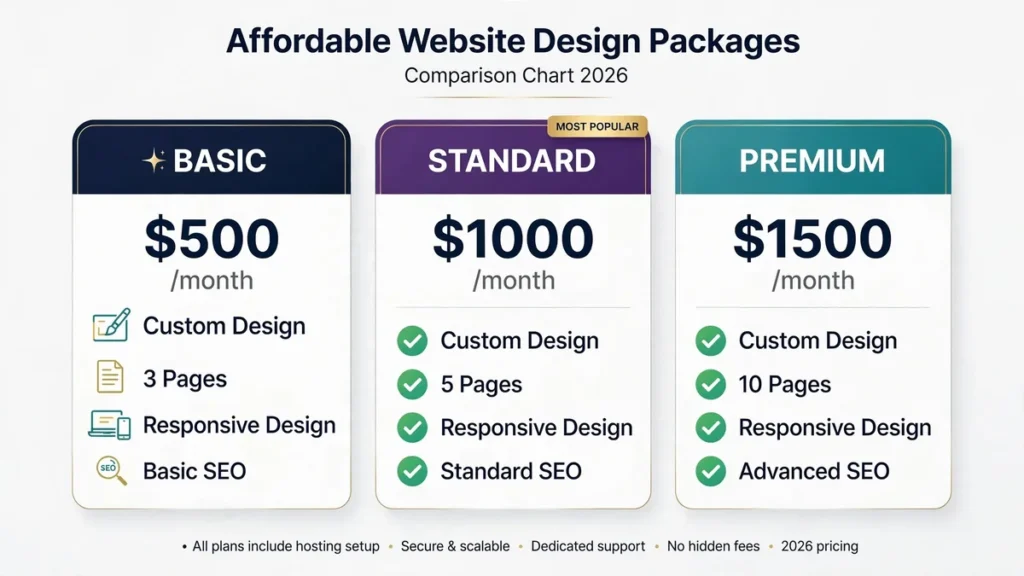
Agency proposals generally fall into three standard tiers based on complexity, integration needs, and business goals. Knowing where your project fits ensures you pay only for features that drive measurable ROI.
Basic Custom Website Package
A basic custom build typically ranges between $1,500 and $3,500. This tier caters to small service businesses or startups needing a professional 5 to 10 page online presence.
It includes bespoke homepage visual design, mobile responsiveness, essential lead forms, and foundational technical SEO. Standard CMS configuration allows team members to update text and imagery without touchpoints from developers.
Professional Business Custom Package
Mid-tier business sites generally range from $3,500 to $8,500 based on functional requirements. This level serves established companies that require multi-layer page layouts, dynamic content filtering, and third-party CRM connections.
Agencies craft custom component libraries, advanced animations, dynamic blog architectures, and structured schema implementation. This tier balances tailored brand identity with flexible content expansion.
Enterprise and eCommerce Custom Package
Complex enterprise platforms or custom digital storefronts typically start at $8,500 and can reach $25,000 or more. These platforms require custom user account portals, bespoke database modeling, headless CMS builds, or heavy API orchestrations.
Enterprise packages demand rigorous security testing, load speed engineering, and continuous deployment workflows. Companies receive tailored checkout paths, custom ERP integrations, and enterprise-grade search infrastructure.
Key Factors Influencing Custom Web Design Cost
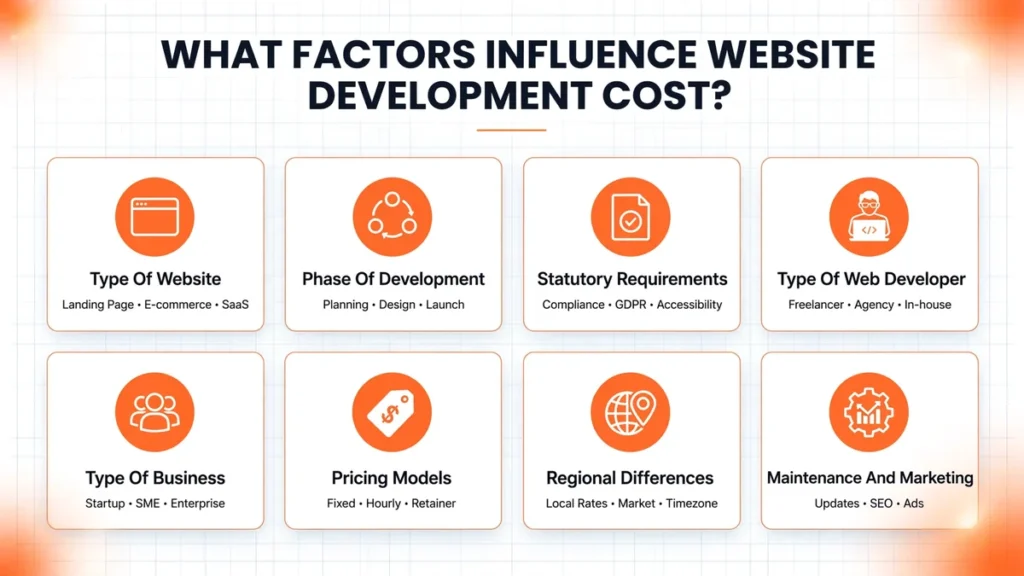
Every custom build starts from scratch rather than modifying pre-made off-the-shelf templates. Specific technical choices directly determine the final billing figure on your project proposal.
Scope, Architecture, and Page Count
The number of unique page layouts directly controls design time and frontend assembly hours. Building a single-page app requires far less asset prep than a 50-page corporate hub with distinct template categories.
Structured content planning and URL hierarchy mapping demand dedicated strategy hours. Clear information architecture prevents costly re-engineering phases late in the build cycle.
Custom UI/UX and Interactive Experience
Pre-made templates restrict brand identity, whereas custom UI/UX design translates your brand guidelines into tailored interactive interfaces. Wireframing, user testing, and high-fidelity Figma prototypes add production hours but dramatically increase user conversion rates.
Interactive elements like dynamic calculators, custom filtering tools, and micro-animations demand skilled frontend scripting. Investing in tailored user experiences improves engagement metrics and lowers page bounce rates.
Tech Stack, API Integrations, and Security
Your chosen technology stack shapes both upfront engineering fees and ongoing infrastructure maintenance. Custom web apps built on modern frameworks require specialized developer skills compared to basic site builders.
Integrating payment processors, inventory management software, or marketing automation platforms adds backend integration complexity. Securing user data with custom role permissions, SSL deployment, and Web Application Firewalls protects your digital assets against vulnerabilities.
To explore tailored technical builds designed for scalable growth, explore our custom web development services.
Custom WordPress Website Development Cost vs Fully Custom Stack
Deciding between a custom WordPress build and a headless or full-stack framework depends on your operational workflow and performance targets. Both approaches offer unique advantages depending on team resources and content updating frequencies.
WordPress Custom Theme Engineering
A custom WordPress website development cost usually spans from $2,500 to $7,000 for standard business applications. Developers build tailored Gutenberg blocks or custom PHP themes without using bloated commercial page builders.
This strategy guarantees clean HTML output, fast page load times, and an intuitive editing backend for content managers. Custom WordPress builds offer lower overall development costs while maintaining flexibility for marketing teams.
Framework-Based Custom Development
Fully custom applications engineered with React, Next.js, Angular, or Laravel typically range from $6,000 to $30,000+. These headless or custom stack builds separate frontend presentation layers from backend data structures.
This architecture offers server-side rendering, top-tier Core Web Vitals, and resilience against server overloads. While initial engineering requires higher budget allocations, security and processing speed remain unmatched.
Custom Web Design Pricing Comparison Matrix
Comparing package features side-by-side helps identify the exact tier alignment for your business requirements.
| Feature / Metric | Basic Custom Tier | Professional Custom Tier | Enterprise / Custom Stack |
| Typical Cost Range | $1,500 – $3,500 | $3,500 – $8,500 | $8,500 – $25,000+ |
| Page Layout Scope | 5 – 10 Pages | 10 – 25 Pages | 25+ Custom Views |
| Primary Tech Stack | WordPress / PHP | Custom WP / Headless CMS | Next.js, React, Laravel |
| Design Approach | Tailored Figma Layouts | Bespoke Component Library | Enterprise UI/UX System |
| SEO Foundation | On-Page & Schema Basics | Advanced Semantic SEO & AEO | Technical & Entity SEO Architecture |
| API Integrations | Basic Contact / Form CRM | Payment & Automation APIs | Custom ERP, CRM & Data Pipelines |
| Target Audience | Local Service Brands | Growing Commercial Agencies | Enterprise & Global Brands |
Step-by-Step Guide to Budgeting Your Web Project
Calculating your web design budget requires systematic planning to ensure project goals align with financial resources.
Step 1: Define Technical Scope and Business Objectives
Document every functional requirement, required page view, and integration need before requesting agency quotes. Identify whether your primary goal is lead generation, ecommerce sales, or brand positioning.
Clear project briefs prevent scope creep and keep agency quotes directly comparable.
Step 2: Compare Agency Pricing Models
Agencies quote projects using fixed-price milestones, hourly rates, or value-based retainer tiers. Fixed-price contracts provide budget predictability for defined deliverable scopes.
What are some tips for discussing pricing and budget with a designer?
Tips for Navigating Pricing Conversations with Your Web Designer
Transparent communication is key when it comes to aligning on project costs with your chosen design partner. An open dialogue not only fosters trust but ensures you get the most value from your investment—and avoid any surprise line items down the road.
To streamline your budgeting discussions, consider these best practices:
- Benchmark Industry Rates: Research prevailing rates for similar project scopes. Referencing standard pricing from reputable studios or industry resources (such as Clutch.co or Upwork) gives you a reference to gauge fairness.
- Articulate Your Budget and Goals Upfront: Clearly outline your spending limits and project priorities during your initial consultation. This gives your designer a chance to propose cost-effective solutions—whether that’s scaling down custom features or switching to a more streamlined tech stack.
- Scrutinize Deliverables and Scope: Ask for a breakdown of what’s included in the quoted price, from number of unique template designs to integration work. Clarify which post-launch updates or technical support are covered, and which might carry additional fees.
- Explore Value Engineering Options: If an initial proposal is outside your comfort zone, discuss ways to optimize scope—such as prioritizing certain features, phasing the build, or leveraging open-source plugins to control costs.
- Maintain Professionalism and Flexibility: Approach negotiations as a collaborative process. Designers often appreciate candor and are usually willing to work within realistic parameters, so long as expectations are mutually agreed upon.
- Involve a Third-Party Advisor if Needed: For complex builds or unfamiliar pricing models, consider consulting with an experienced project manager or digital advisor. They can help you interpret proposals and advocate for your interests.
Thoughtful discussions about money set the stage for a successful project trajectory and a digital solution that meets both your targets and budget constraints.
How should you talk about price and negotiate with web designers?
Navigating Pricing Conversations and Negotiation With Web Design Agencies
Transparent communication is essential when approaching web design pricing and negotiations. While discussing budgets may feel daunting, a collaborative conversation is the key to achieving the best return on your investment.
Start by researching comparable project costs from reputable portfolios and platforms—think Awwwards, Clutch, or Behance—to establish realistic expectations. Thorough market awareness not only empowers your discussions but also signals to agencies that you have clarity on standard industry rates.
When it’s time to discuss numbers, be upfront about your working budget and desired outcomes. A well-defined brief outlining must-have features and business goals streamlines conversations and helps agencies propose creative solutions within realistic parameters. If a proposal exceeds your limit, don’t hesitate to ask about scaling back scope, phasing deliverables, or utilizing an existing design framework.
Other helpful tips:
- Ask for a transparent breakdown of deliverables, timelines, and any expected additional expenses (like licensing fees or third-party integrations).
- Explore payment structures—some agencies offer milestone billing, staged deposits, or value-based pricing aligned with business outcomes.
- Maintain open lines of communication. Approach negotiations with mutual respect and an understanding of the agency’s expertise and your budget’s boundaries.
If uncertainty remains, consult a business advisor or project manager familiar with digital contracts to review agency proposals and help safeguard your interests.
Thoughtful, direct negotiation ensures both parties achieve a fair agreement—solidifying a partnership built to deliver measurable results for your brand.
Step 3: Account for Post-Launch Operational Expenses
Factor hosting, security maintenance, domain registration, and software licensing into your total cost of ownership. Allocate 10% to 15% of initial build costs annually for technical maintenance and security updates.
Continuous maintenance ensures long-term site health, fast load times, and strong search engine rankings.
Custom Web Design Scope Checklist
Use this checklist to confirm essential deliverables are explicitly listed in your agency contract.
- [ ] Custom Figma UI/UX designs for desktop, tablet, and mobile devices
- [ ] Clean, semantic HTML5, CSS3, and JavaScript frontend codebase
- [ ] W3C-validated code without unused scripts or excessive CSS bloat
- [ ] Mobile-first responsive optimization across popular screen viewports
- [ ] On-page SEO setup, XML sitemaps, robots.txt, and schema markup
- [ ] Core Web Vitals performance tuning passing PageSpeed insights
- [ ] Google Analytics 4 (GA4) and Google Search Console tracking setup
- [ ] Cross-browser testing on Chrome, Safari, Edge, and Firefox
- [ ] Handover documentation and administrative backend training sessions
Expert Tips for Maximizing Web Development ROI
Web Vision Expert Insight: Designing a website without integrating search engine optimization from day one leads to expensive post-launch rework. Structuring schema markup, entity relationships, and fast site architecture during initial development ensures immediate visibility across Google AI Overviews and traditional search engines.
Focus on modular component design rather than static individual pages. Reusable UI components reduce future site expansion costs and preserve visual brand consistency.
Prioritize conversion rate optimization in your layout planning. Clear call-to-action buttons, trust badges, and fast form loading generate higher returns on your design investment.
5 Common Mistakes Businesses Make When Buying Custom Web Design
Mistake 1: Choosing Pre-Made Templates Marketed as Custom Builds
Many agencies use off-the-shelf themes and minor color tweaks while charging premium custom pricing. This leaves you with heavy code bloat, slow page speed, and security vulnerabilities.
Better approach: Demand custom Figma design files and original theme code repositories before signing contracts.
Mistake 2: Ignoring Search Engine Optimization During the Build Phase
Treating search engine optimization as an afterthought forces costly site architecture overhauls post-launch. Missing title tags, broken canonical links, and poor header hierarchy destroy organic traffic potential.
Better approach: Require your development team to include technical SEO, schema architecture, and search intent planning during site staging.
Mistake 3: Overlooking Mobile Responsiveness and Touch Interactions
Designing exclusively for desktop screens damages conversion rates for mobile search visitors. Button spacing, tap targets, and responsive image loading must perform flawlessly on handheld devices.
Better approach: Enforce a mobile-first design protocol with device-specific testing throughout staging.
Mistake 4: Failing to Clarify Post-Launch Support and Code Ownership
Businesses sometimes lose access to their domain registration, code repos, or database backups after project completion. Vague maintenance clauses leave sites vulnerable to plugin breaks and security threats.
Better approach: Secure full intellectual property ownership in writing and define clear post-launch maintenance terms.
Mistake 5: Focusing on Aesthetic Visuals Over Page Speed and Accessibility
Excessive videos, uncompressed images, and heavy scripts slow down site load times significantly. Poor color contrast and missing ARIA attributes alienate visitors with accessibility needs.
Better approach: Set strict Core Web Vitals thresholds and WCAG accessibility standards as required project deliverables.
Frequently Asked Questions
What is the price of website development for a custom business site?
The price of website development for a custom business site generally ranges between $2,500 and $10,000. Costs depend heavily on page volume, unique UI/UX designs, custom functionality, and technical SEO integration. Complex enterprise builds with advanced features can exceed $20,000.
Why is custom web design more expensive than template sites?
Custom web design requires tailored UI/UX design, clean hand-coded frontend scripts, bespoke database architecture, and specific search engine optimization strategies. Templates rely on pre-built code that includes unwanted features and speed bloat. Custom sites yield higher conversion rates, superior security, and longer operational lifespans.
How Much Do Website Add-On Services Typically Cost?
Add-On Services: Enhancements and Their Cost Ranges
Beyond core development, add-on services empower your website to perform, convert, and serve better. Depending on your goals—be it boosting sales, reaching new audiences, or ensuring full accessibility—these enhancements can have a marked impact on both usability and ROI.
Common add-ons include:
- Ecommerce functionality upgrades: Advanced product filtering, recurring subscription setups, or multi-vendor marketplace support can run anywhere from $500 to $5,000+, with complexity and required integrations driving costs.
- Custom feature development: Unique workflows, interactive tools, or bespoke dashboards often start around $1,000 and can scale much higher depending on specifications.
- Accessibility improvements: Ensuring compliance with standards like WCAG or ADA often ranges from $500 for basic audits and fixes, to several thousand dollars for in-depth remediation.
- Conversion rate optimization (CRO): UX audits, A/B testing, and implementation of conversion-boosting features typically start near $750 and scale with the scope of updates.
- Paid advertising management: Ad campaign setup and optimization, whether on Google Ads, Meta, or LinkedIn, often ranges from $300 to $2,000+ per month, not including actual ad spend.
The ultimate investment depends on your website’s starting point, business needs, and growth ambitions. Custom quotes are the norm, as each enhancement package is tailored to fit your unique requirements.
How much does a custom WordPress website development cost on average?
A custom WordPress website development cost typically falls between $2,500 and $7,500 for standard business platforms. This includes bespoke Gutenberg block development or custom PHP theme construction. It avoids commercial page builders, ensuring fast load speeds, clean HTML output, and an intuitive editing experience.
What hidden costs should I watch for in custom web design proposals?
Common hidden costs include premium software plugin licenses, website hosting fees, ongoing security maintenance, domain registration, and custom content copy writing. Always ask agencies to itemize post-launch maintenance, third-party API fees, and content population hours to avoid unexpected charges later.
How long does it take to complete a custom web design project?
A standard custom web design project usually takes between 6 to 12 weeks from strategy kickoff to final deployment. Basic sites require 4 to 6 weeks, while complex enterprise platforms take 12 to 20 weeks due to extensive UI testing, API integrations, and quality assurance.
Conclusion
Understanding custom web design pricing enables business owners to select the right agency partner and secure maximum digital return on investment. Evaluating package scope, design customization, tech stack requirements, and technical SEO ensures your investment builds a high-performing digital asset. Avoiding common buying mistakes and enforcing clear deliverable benchmarks guarantees a smooth build process from start to finish.
Web Vision Expert specializes in engineering custom web applications, bespoke WordPress platforms, and AI search-optimized websites designed to convert traffic into revenue. Contact our team today to review your project scope and receive a transparent, itemized proposal for your web design initiative.