
Search engine optimization is undergoing its biggest structural shift since the launch of Google itself. If you are noticing a drop in traditional click-through rates despite holding top organic positions, you are seeing the direct impact of artificial intelligence on search behavior. Understanding how ai search is changing seo in 2026 is no longer optional for digital marketers, founders, and content creators—it is essential for digital survival.
The era of ten blue links is rapidly giving way to conversational synthesized answers, zero-click search journeys, and multi-platform AI engines. In this comprehensive guide, we break down what has shifted, why traditional rankings are losing ground to AI citations, and the exact strategies you need to build long-term topical dominance.
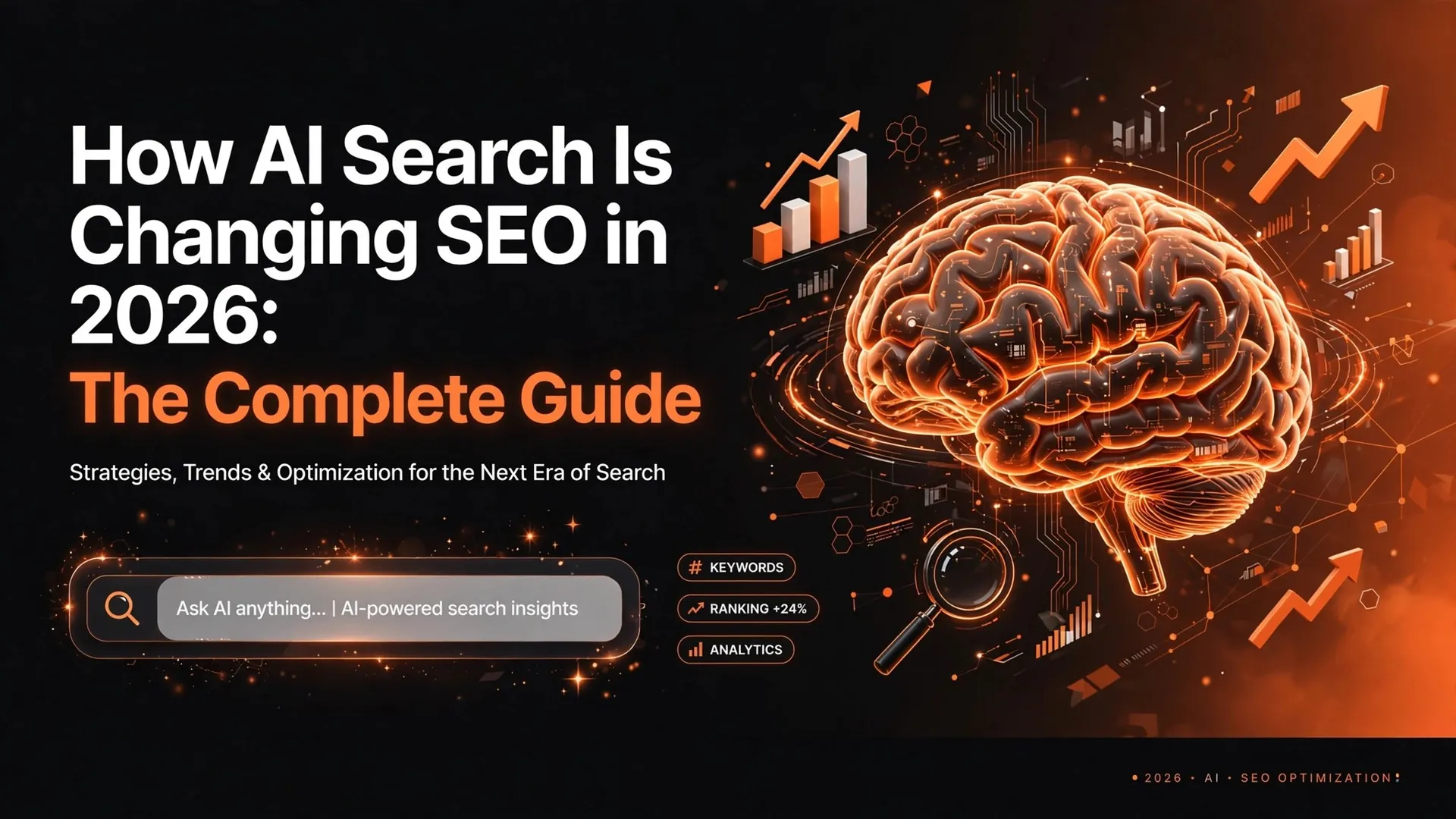
Understanding How AI Search Is Changing SEO in 2026
Google AI Overviews, Gemini, ChatGPT Search, and Perplexity have transformed how searchers seek and consume information. Users no longer scroll through multiple pages of search results to piecemeal an answer. Instead, generative models extract, synthesize, and display complete answers directly inside the search interface.
Traditional Search Flow:
Query ➔ SERP ➔ Click Link ➔ Read Website ➔ Conversion

Modern AI Search Flow:
Conversational Prompt ➔ AI Synthesized Answer (GEO/AEO) ➔ Direct Citation / Recommended Brand
Why Knowing How AI Search Is Changing SEO in 2026 Matters for Businesses
When Google displays an AI Overview at the top of the search engine results page (SERP), the traditional number-one organic link experiences an average click-through rate decline of over 58%. Searchers get instant answers without leaving the page.
However, this does not mean organic search is dead. Rather, organic traffic has become far more qualified. When a user actually clicks a citation link inside an AI Overview or ChatGPT response, their intent to convert or purchase is significantly higher than a standard browser click.
The Shift from Rank Positions to AI Citations
For two decades, search engine optimization was measured by keyword positions. In 2026, the primary metric of success is whether generative engines cite, reference, and recommend your brand as a primary source.
1. Zero-Click Dominance
Simple informational queries like “what is the capital of Australia” or “how to calculate CAGR” are completely answered inside AI modules. Ranking for surface-level keywords no longer guarantees website traffic. Success now requires focusing on high-intent, complex, multi-layered queries that require deep exploration.
2. The Rise of Brand Co-occurrences
Backlinks remain helpful, but generative models place massive weight on digital brand mentions across the web. If your business is consistently mentioned alongside industry topics on forums like Reddit, niche industry blogs, podcasts, and comparison roundups, AI models learn to associate your brand with that topic entity.
3. Fragmentation Across Multiple Platforms
Search is no longer confined to Google. Users routinely start product research on ChatGPT, compare software on Perplexity, look up reviews on Reddit, and ask visual questions through Google Lens. Modern SEO requires a multi-platform presence.
If you want to understand how conversational engines compare to standard algorithms, review our breakdown on AI search vs traditional SEO.
Key Strategies: How AI Search Is Changing SEO in 2026 for Maximum Growth
To thrive in this new landscape, you must update your organic strategy across content creation, technical architecture, and off-page visibility. Here are six foundational pillars to implement immediately.
Pillar 1: Master Generative Engine Optimization (GEO)
Generative Engine Optimization (GEO) is the process of structuring content so that artificial intelligence models quote, summarize, and cite your pages.
- Add Direct Definitions: Place a clear 2-sentence summary of the core concept directly under your main section headings.
- Include Hard Data and Original Stats: AI engines love citing statistics, original survey results, and proprietary metrics.
- Use Quotable Expert Opinions: Include unique quotes from named industry specialists to provide first-person authority.
Pillar 2: Execute Answer Engine Optimization (AEO)
AEO focuses on crafting direct answers to long-tail conversational questions. Instead of optimizing for generic phrases like “best accounting software,” target natural language prompts like “which accounting software is best for a remote team of 10 with multi-currency support?”
To build out your question-answering framework, explore our comprehensive Answer Engine Optimization guide.
Pillar 3: Provide Information Gain
AI tools generate generic summaries by scraping existing top results. If your article merely repeats what ten other blogs have said, LLMs will ignore your site. You must offer “Information Gain”—new perspective, custom teardowns, hands-on tests, or original data that does not exist anywhere else online.
Pillar 4: Build Entity-Based Topical Authority
Search engines organize knowledge through Entities (people, places, concepts, and organizations) and their relationships. Instead of publishing disconnected articles, create deep topic clusters where every sub-topic is thoroughly linked back to a main pillar page.
Pillar 5: Optimize for Multimodal Search
In 2026, search inputs include images, voice prompts, and video clips alongside traditional text.
- Visual Search: Optimize images with descriptive file names, contextual ALT text, and high-resolution schema.
- Voice Search: Structure content around spoken language patterns and direct Q&A formats.
- Video Indexing: Include full transcripts, structured chapter timestamps, and explicit video schema.
Pillar 6: Strengthen Third-Party Validation
AI models cross-verify information across the web. Ensure your brand maintains active profiles, verified local listings, positive forum discussions, and consistent citations across authority review sites.
GEO vs. AEO vs. Traditional SEO
Understanding the distinction between these three overlapping search disciplines helps you allocate your team’s budget and resources effectively.
| Feature | Traditional SEO | Answer Engine Optimization (AEO) | Generative Engine Optimization (GEO) |
| Primary Target | Search engine crawlers & SERP links | Voice assistants & direct answer boxes | Large Language Models (LLMs) & AI summaries |
| Core Goal | High keyword positions & organic clicks | Featured snippets & instant direct answers | AI brand citations, recommendations & quotes |
| Content Structure | Long-form blog posts & keyword landing pages | Concise Q&A blocks, FAQs, and bullet lists | Structured data, statistics, expert insights & tables |
| Key Metric | Organic Traffic & SERP Ranking Position | Voice query impression & snippet capture | Citation rate, brand share of voice in AI prompts |
| Primary Platforms | Google, Bing, Yahoo | Google Assistant, Siri, Alexa, Perplexity | Google AI Overviews, ChatGPT Search, Gemini, Perplexity |
The Modern 2026 AI SEO Tool Stack
Traditional SEO suites designed for tracking rank positions are no longer sufficient on their own. Today’s digital marketing stack combines traditional crawlers with dedicated AI visibility platforms.
2026 SEO Software Ecosystem
├── AI Search Visibility Platforms (GEO Monitors)
│   ├── AthenaHQ (Prompt tracking & source intelligence)
│   ├── Peec AI (Automated citation tracking)
│   ├── Profound (Enterprise AI search monitoring)
│   └── Rankscale AI (Multi-engine AI coverage)
├── Traditional SEO & Backlink Suites
│   ├── Ahrefs (Brand Radar & link index)
│   └── Semrush AI Toolkit / Adobe Integration
└── Free AI Audit Tools
    └── Mangools AI Search Grader
- AthenaHQ: Tracks how your brand appears across generative prompts, identifies source citation gaps, and analyzes competitor share of voice inside AI answers.
- Peec AI: Monitors brand mentions and citation sources across thousands of publisher network references powering LLMs.
- Profound: Provides enterprise-grade analytics tracking visibility across ChatGPT, Perplexity, Claude, and Google AI Overviews.
- Rankscale AI: Tracks brand sentiment, prompt visibility, and multi-engine presence across global markets.
- Mangools AI Search Grader: A free entry-level tool for quick snapshots of your website’s visibility inside AI search systems.
If you are looking for professional assistance to upgrade your organic search infrastructure, learn more about custom AI SEO services.
Technical SEO for LLM Crawlers and Indexing
Technical SEO forms the underlying foundation that enables AI models to read, index, and render your site’s content cleanly.
                          ┌── OAI-SearchBot (ChatGPT)
                          ├── PerplexityBot
Web Content ──► Robots.txt ┼── Google-Extended
                          └── ClaudeBot
                                │
                                ▼
                   Parsed via JSON-LD Schema
                                │
                                ▼
                  Synthesized AI Citation Output
1. Allow Essential AI Crawlers in robots.txt
Blocking AI crawlers prevents LLMs from accessing your latest research and citing your products. Ensure your robots.txt file permits key user agents:
GPTBotandOAI-SearchBot(OpenAI / ChatGPT)PerplexityBot(Perplexity)Google-Extended(Google AI services)ClaudeBot(Anthropic)
2. Implement Comprehensive Schema Markup
Schema markup acts as a direct translation layer for AI engines. Implement rich structured data across all templates:
- Article & NewsArticle Schema: Define author entities, publication dates, and explicit publisher organizations.
- Product & Offer Schema: Provide real-time price, stock availability, and verified buyer review aggregations.
- FAQPage Schema: Help answer engines extract concise question-and-answer pairs directly.
- Organization Schema: Establish clear brand relationships, official social profiles, and physical address entities.
3. Maintain Fast Site Performance
Page speed remains a core user experience requirement. Keep Server Response Times low, optimize Core Web Vitals, and deliver clean, server-side rendered HTML that crawlers can parse without waiting for complex JavaScript execution.
AI Search Actionable Optimization Checklist
Use this practical checklist to audit and upgrade your existing web pages for modern AI search visibility:
- [ ] Publish Original Research: Include at least one unique stat, survey result, or proprietary observation per core article.
- [ ] Add Quick Summary Blocks: Insert 2 to 3 sentence direct definitions beneath major subheadings.
- [ ] Structure Content with Tables: Convert complex list comparisons into clean Markdown or HTML data tables.
- [ ] Audit
robots.txtConfiguration: Verify that major search AI crawlers are permitted to fetch your pages. - [ ] Deploy Comprehensive Schema: Add Organization, Article, Product, and FAQ JSON-LD markup.
- [ ] Claim Third-Party Directory Listings: Maintain accurate company profiles across major review sites and local business portals.
- [ ] Monitor Brand Mentions: Track digital mentions on Reddit, YouTube descriptions, and industry roundups.
- [ ] Optimize for Conversational Prompts: Answer explicit, multi-layered user scenarios rather than single target keywords.
Expert Tips to Outperform AI Aggregation
- Leverage First-Person Experience (E-E-A-T): AI models can summarize information, but they cannot live through real-world experiences. Use first-person phrasing (“In our testing,” “Our team observed,” “We analyzed 500 client accounts”) to establish human authority.
- Build a Community Footprint: AI models heavily weight community discussions on forums like Reddit and Quora. Actively participate in industry discussions to build genuine brand mentions in user-generated threads.
- Focus on Bottom-of-Funnel Conversion Queries: While top-of-funnel broad traffic experiences zero-click drops, specific comparison and buying guide queries yield high conversion rates. Focus content on helping users solve specific, complex problems.
Common Mistakes to Avoid in Modern SEO
- Publishing Unedited Mass AI Content: Generating hundreds of generic blog posts creates digital noise. Search engines filter out duplicate, low-value AI text.
- Ignoring Off-Site Brand Mentions: Focusing exclusively on your own domain while ignoring forum discussions, industry podcasts, and third-party reviews cripples your visibility in AI engines.
- Obsessing Over Exact-Match Keyword Density: Forcing identical keyword repetitions makes text unnatural and hurts semantic understanding. Write naturally for human intent.
- Blocking AI Bots Unintentionally: Misconfiguring disallow rules in
robots.txtcan silently remove your site from being recommended in ChatGPT or Perplexity search results.
Frequently Asked Questions
Will AI search replace traditional SEO completely?
No, AI search transforms SEO rather than destroying it. While simple informational clicks are decreasing due to zero-click answers, high-intent traffic for complex queries remains strong. Success requires shifting focus from keyword rankings to earning citations in AI-generated answers.
What is the difference between GEO and traditional SEO?
Traditional SEO focuses on optimizing web pages to rank in search engine results pages for specific keywords. GEO (Generative Engine Optimization) focuses on structuring content, data, and brand mentions so that generative AI engines cite your business directly inside conversational answers.
How do I get my website cited in Google AI Overviews?
To get cited in AI Overviews, publish original data, provide direct answers to conversational questions, implement schema markup, maintain strong technical health, and build brand mentions across authority third-party sites like Reddit, niche forums, and review directories.
Does backlink quantity still matter in 2026?
Backlinks still pass authority, but backlink volume alone is no longer decisive. Digital brand mentions, entity co-occurrences, topical depth, and structured content hold equal or greater weight in determining whether an AI search engine trusts and references your brand.
The shift toward generative search rewards brands that prioritize depth, transparency, original research, and multi-platform visibility. By aligning your strategy with how AI search is changing SEO in 2026, you position your business to capture high-intent audiences and build sustainable digital authority across both traditional search engines and next-generation answer engines.