
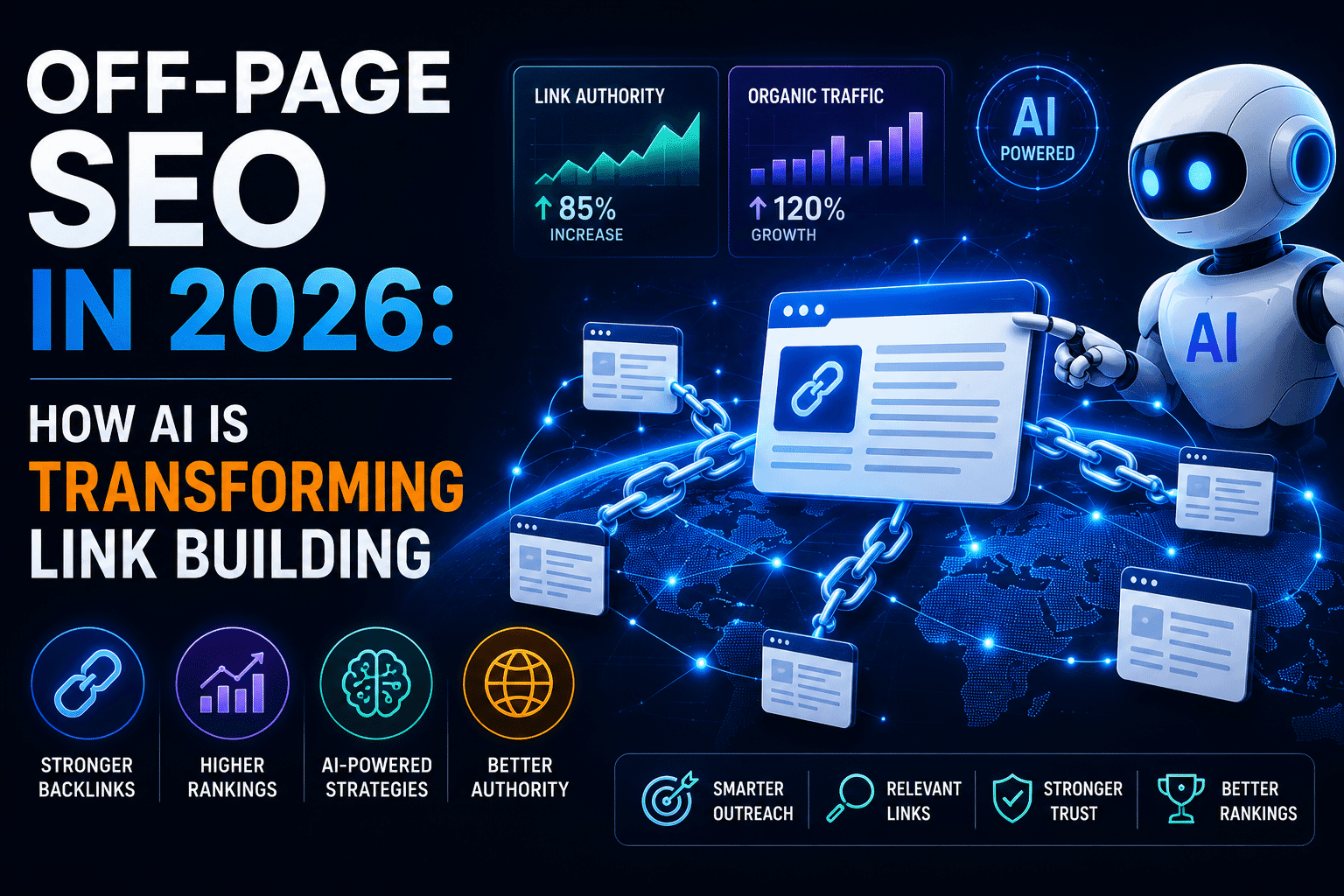
The landscape of search engine optimisation is in constant flux, but the advent of artificial intelligence has introduced a new paradigm shift, particularly within off-page SEO in 2026. As we look towards the future, understanding how machine learning is not just augmenting but fundamentally transforming traditional link-building strategies is crucial for maintaining and enhancing search visibility.
Introduction to SEO in 2026
The Evolution of SEO
SEO in 2026 is a far cry from its predecessors, having undergone a dramatic evolution driven by advancements in artificial intelligence. With the meteoric rise of AI, industry sceptics frequently claim that SEO is dead. However, SEO today has simply matured rather than disappeared. What began as a primitive focus on keyword stuffing and basic backlink acquisition has morphed into a sophisticated discipline demanding a deep understanding of:
- User intent
- Semantic search
- AI search algorithms
The optimisation journey now involves not just satisfying a traditional algorithm but also optimising for AI search and the emerging prominence of AI overviews in search results. A modern, SEO-focused digital strategy is no longer just about classic search engines; it is actively transitioning into answer engine optimisation to capture brand placement within conversational interfaces. For brands wondering if SEO still holds value, the answer lies in adapting to how modern systems pull data.
Importance of Off-Page SEO
Off-page SEO continues to be an indispensable component of any successful strategy. While on-page and technical SEO ensure your site is crawlable and relevant, off-page factors, particularly the quality and quantity of backlinks, remain critical ranking signals for search engines. It’s about building authority in 2026 and trust beyond your website, demonstrating to both human users and AI platforms that your content is valuable and deserving of a high search result ranking.
Without strong off-page signals, even perfectly optimised on-page content may struggle to achieve desired visibility across the digital ecosystem. Establishing off-site signals is what ultimately cements your AI visibility, ensuring that your brand footprint is prominent when predictive systems assemble live search answers.
Overview of AI in SEO
Artificial intelligence has become deeply embedded in virtually every aspect of optimisation. From keyword research powered by large language models to automated content generation and predictive analytics for organic performance, innovative technology is entirely reshaping SEO and shifting foundational SEO practices.
Intelligent tools are not only influencing how content is created but also how modern search engines and AI models interpret and rank information, especially with the rise of generative search features in Google Search. Understanding and leveraging new AI methodologies in your workflow is no longer optional; it is a prerequisite for sustained success and tracking visibility across dynamic AI search results.
Understanding Link Building
What is Link Building?
Link building, at its core, involves the process of acquiring hyperlinks from other websites to your own. These hyperlinks, also known as backlinks, serve as a fundamental pillar of traditional SEO, acting as ‘votes of confidence’ from one site to another. In 2026, while the underlying principle remains, the methodologies are increasingly influenced by automation and the need to optimise for smart search agents and AI overviews.
Effective link building goes beyond simply accumulating links; it’s about securing high-quality, relevant backlinks that signal authority and trustworthiness to the search engine, thereby improving your site’s search visibility and overall organic performance. This critical part of off-page SEO directly impacts how a website performs in the search result pages.
Types of Backlinks
In the evolving landscape of digital growth, backlinks come in various forms, each carrying different weights and implications for ranking within a successful strategy for off-page SEO in 2026. The focus is always on acquiring natural, relevant backlinks that help AI systems connect contextual dots. Attracting editorial authority helps an AI crawler understand the context, entity associations, and overall quality of your website, ultimately enhancing search optimisation and programmatic visibility, particularly with Google’s AI overviews in mind.
| Backlink Type | Implication for Ranking |
| Editorial Backlinks | Among the most valuable, demonstrating genuine authority and relevance to advanced language models. |
| Guest Posting, Digital PR, Content Marketing | Can generate valuable backlinks, especially when they focus on providing genuine value. |
| Brand Mentions (without direct hyperlinks) | Increasingly recognised by search algorithms as an implicit ranking factor. |
The Role of Backlinks in Ranking
Backlinks continue to play a pivotal role as a primary ranking factor, though their influence is now intricately intertwined with machine-learning search algorithms. Search engines, especially Google Search, interpret backlinks as strong indicators of a website’s authority, credibility, and overall value.
A robust backlink profile, characterised by quality over quantity, signals to specialised AI platforms that your content is trustworthy and relevant, making it more likely to appear high in search result rankings and even be cited in an AI overview. As advanced AI search optimisation becomes paramount, the strategic acquisition of high-quality backlinks is essential for establishing and maintaining search visibility—proving that SEO is not dead, but rather more sophisticated than ever.
AI-Driven Link Building Strategies
AI Tools for Link Building
In 2026, automated SEO tools have become indispensable for sophisticated link building. These smart ecosystems leverage large language models to identify high-quality backlink opportunities, analyse competitor backlink profiles, and even assist in outreach efforts.
Advanced data-driven platforms can pinpoint relevant websites that are likely to link to your content, predict the potential value of a backlink based on various metrics, and help streamline the entire outreach process. By integrating machine learning into their workflows, marketers can significantly enhance their search optimisation efforts, ensuring that their link-building strategies are data-driven and efficient, ultimately improving search visibility and boosting organic performance across an AI-powered search environment.
Optimizing Backlinks with AI
Optimising backlinks with advanced tools goes beyond simple acquisition; it involves strategic analysis and continuous refinement. Modern software can evaluate the quality and relevance of existing backlinks, identify toxic links that could harm ranking, and suggest disavow strategies. Furthermore, intelligent analytics help in understanding the context around backlinks, ensuring that they align with overall marketing strategies and contribute positively to digital AI search visibility.
This level of optimisation is crucial for maintaining a healthy backlink profile, which remains a critical ranking factor for Google Search and other next-generation AI search engines. By executing targeted AI SEO strategies to align with modern web crawlers, businesses can significantly enhance their search result rankings and secure better placement in AI overviews.
Future Trends in Link Building
The future of SEO and link building is deeply intertwined with advancements in cognitive automation. We anticipate even more sophisticated tools that can autonomously identify content gaps, suggest relevant content strategies for attracting natural backlinks, and even engage in preliminary outreach.
The emphasis will shift further towards building trust and authority through genuinely valuable content that search bots readily recognise and cite. With the rise of generative features in search results, securing backlinks will increasingly become about being the authoritative source that autonomous AI agents choose to reference. This proactive approach to link building will be fundamental for long-term marketing success and ensuring visibility in tomorrow’s search experiences.
Impact of AI on Search Engine Optimization
AI Search Optimization Techniques
New-age search optimisation techniques are transforming traditional marketing practices. The focus has expanded beyond merely optimising for short-tail keywords to understanding and catering to complex semantic algorithms and natural language processing.
This includes optimising content for AI overviews, ensuring your information is readily digestible by algorithmic scrapers, and creating content that is comprehensive enough to be cited in AI results. Marketing professionals are now using predictive platforms to analyse user intent with greater precision, forecast search trends, and tailor content strategies that resonate with algorithmic search engines. This strategic shift is vital for maintaining high ranking and search visibility in an automated landscape.
SEO Strategies for 2026
Digital blueprints for the future must be inherently machine-intelligent. The core objective is to optimise for AI, ensuring that content not only satisfies human users but also aligns with how advanced models process and present information. This involves a strong emphasis on semantic SEO, creating authoritative content that serves as a valuable source for algorithmic citation, and proactively addressing potential zero-click search scenarios where instantaneous answers might provide immediate solutions.
Integrating intelligent tools for comprehensive audits, predictive analytics, and content generation will be commonplace. Crafting a dedicated SEO strategy for 2026 demands adaptability and a deep understanding of how advanced technology influences every stage of the user journey, from initial query to the final search result.
Adapting to AI-Driven Search
Adapting to AI-driven search is no longer an option but a necessity for sustained SEO success. Marketing professionals must embrace the shift towards generative engine optimisation, where the goal is to be the primary source that generative AI platforms utilise. This means evolving beyond traditional metrics and focusing on building a digital presence that core algorithms perceive as highly credible and valuable.
It also involves monitoring how content is being presented in direct search results and adjusting strategies accordingly. By understanding the nuances of algorithmic search, businesses can continue to build trust, enhance their search visibility, and thrive across 2026 and beyond.
Enhancing Visibility through AI
Improving Search Visibility
Improving visibility across modern search networks is inextricably linked to leveraging smart technologies. Traditional approaches alone are no longer sufficient; instead, a sophisticated approach that optimises for conversational search and automated overviews is paramount.
Data-driven software can analyse vast datasets to identify patterns and opportunities that human eyes might miss, offering insights into relevant keyword variations, optimal content structures, and even predicting shifts in search intent. By employing machine learning to refine both on-page and off-page elements, businesses can ensure their content is not only crawlable but also highly valued by search algorithms, thereby boosting their ranking and securing crucial visibility.
AI Content Generation for SEO
Automated AI content generation is revolutionising how web properties approach content strategies, directly impacting ranking and search visibility. Large language models can produce high-quality, relevant content at scale, helping to fill content gaps and optimise for semantic engines. These tools can craft engaging narratives that resonate with user intent, ensuring that the text is primed for being cited in AI overviews.
However, merely generating text is not enough; the focus must remain on producing authoritative, unique pieces that position the website as a valuable source. Blending human expertise with a new SEO mindset will ensure your content asset remains highly effective at contributing to long-term digital growth.
The Future of Digital PR and AI
The future of digital PR is being reshaped by automation, transforming how brands build trust and acquire valuable backlinks. Predictive tools can identify influential publishers, journalists, and thought leaders who are most likely to provide editorial backlinks and brand mentions, streamlining outreach efforts.
Furthermore, data systems can analyse news trends and media consumption patterns to inform more targeted and effective digital PR campaigns. Navigating these changes seamlessly requires expert human guidance. Agencies like Web Vision Expert specialise in blending digital PR with algorithmic optimisation to help brands build natural off-site footprint networks. Utilising advanced, forward-looking off-page SEO services ensures that a brand builds authoritative equity that can withstand core updates. This modern approach enhances the likelihood of securing high-quality placements that improve search visibility and reinforce a brand’s authority within algorithmic search results, making digital PR an even more powerful component of a comprehensive approach to managing Google and AI relationships.
Measuring SEO Performance in 2026
Key Metrics for SEO Success
Measuring organic success requires a recalibration of key metrics, with data-driven insights taking centre stage. Beyond traditional metrics, SEO professionals must now pay close attention to advanced, intent-centric metrics to accurately gauge the future of AI tracking across web environments. Modern platforms provide granular data on how automated systems interact with content, offering a deeper understanding of SEO performance and user behaviour.
Monitoring these advanced metrics is crucial for ensuring that your efforts are effectively contributing to overall search visibility and long-term organic health in an automated search environment.
Key metrics for organic success:
| Traditional Metrics | AI-Centric Metrics |
| Organic traffic | Visibility in ai overviews |
| Keyword ranking | Frequency of AI citation |
| Backlink count | Engagement from zero-click search scenarios |
Tools for Tracking Link Building
Tracking link-building performance is significantly enhanced by sophisticated software that goes far beyond basic backlink monitoring. Modern platforms can not only identify newly acquired backlinks but also assess their semantic quality, contextual relevance, and potential impact on ranking.
These optimisation tools can detect toxic backlinks, analyse competitor backlink profiles for new opportunities, and provide predictive analytics on outreach effectiveness. Integration with Google Search Console offers a holistic view of how backlinks contribute to overall search visibility, enabling digital marketers to refine their link-building strategies and ensure they are building a robust, algorithm-friendly backlink profile that helps automated crawlers understand true niche authority.
Adjusting Strategies Based on AI Insights
Adjusting digital practices based on automated insights is fundamental for maintaining competitive search visibility. Machine-learning systems provide continuous data analysis, revealing real-time trends in user intent and text placement within search overviews.
This allows growth specialists to quickly adapt their content strategies, refine keyword targeting, and optimise their web properties by addressing topical gaps or capitalising on emerging organic opportunities. By leveraging these real-time data insights, businesses can proactively modify their link building and overall workflows, ensuring their efforts remain aligned with the dynamic demands of modern search engines.