

When building an enterprise digital presence, business owners frequently ask: what is custom web development? Put simply, it is the process of designing, building, and deploying a unique website tailored specifically to your business goals. Unlike off-the-shelf templates, custom code gives you total control over functionality, user experience, and security.
Every brand has specific operational workflows and customer journeys that generic themes cannot support. Understanding what is custom web development helps you decide whether a tailored solution justifies the investment over pre-built alternatives.
What is Custom Web Development and How Does It Work?
To understand what is custom web development, you must look beyond basic website building. Custom engineering means writing clean, modular code from scratch or modifying advanced frameworks to match exact business specifications. Engineers craft specialized database structures, custom application programming interfaces (APIs), and personalized user interfaces.
This approach eliminates unnecessary bloatware, third-party plugin dependencies, and rigid layout constraints. Every element on the page exists solely to serve your users and drive business performance.
Key Characteristics of What is Custom Web Development
Custom software delivers distinct technical advantages that off-the-shelf options cannot match. Knowing what is custom web development involves identifying these primary traits:
- Tailored Architecture: Database schemas and server environments are configured for your specific traffic patterns and operational logic.
- Bespoke UI/UX Design: User interfaces are crafted around your exact brand identity and customer conversion pathways.
- Proprietary Functionality: Custom workflows, automated tools, and internal portals are built directly into your software stack.
- Independent Scalability: Your server infrastructure can expand smoothly as user traffic grows without artificial plugin constraints.
Custom Development Meaning in Modern Tech Stacks
The custom development meaning extends across both frontend and backend technologies. Frontend developers use languages like JavaScript, React, or Vue to build intuitive browser interfaces. Meanwhile, backend engineers utilize Python, Node.js, PHP, or Go to build scalable servers and secure databases.
By pairing modern frameworks together, developers create fast, secure web portals. This custom architecture ensures your digital platform scales smoothly as your user base expands.
Custom Web Application Development vs Traditional Websites
Many business leaders confuse basic web design with complex application development. Exploring what is custom web development requires distinguishing static web pages from dynamic web applications.
What are Custom Web Applications?
Understanding what is custom web application development begins with user interaction. Custom web applications are interactive software programs running inside a web browser. Examples include online banking portals, client dashboards, customer relationship management (CRM) systems, and SaaS platforms.
Unlike basic informational pages, what are custom web applications built for? They process complex real-time data, manage secure user accounts, and execute automated business logic.
What is Custom Web Design vs Web Development?
When asking what is custom web design, people often lump visual design and functional coding together. Custom web design focuses purely on user experience (UX), visual aesthetics, branding, and interface layouts.
Conversely, custom web development turns those visual mockups into functional, fast, and secure web software. Both disciplines work together to produce a cohesive digital platform.
Why Choose Custom Web Development Over Pre-Made Templates?
Many company owners wonder: why custom website builds are preferred by growing enterprises. While pre-made templates seem cheap and easy initially, they often limit long-term business growth.
Choosing a tailored build gives you full ownership of your source code and data assets. You never have to worry about template developers abandoning support or pushing broken updates. If you want to explore professional technical implementation, consider exploring our custom web development services for tailored enterprise builds.
Do Web Developers Use CMS for Custom Projects?
A common question among non-technical founders is: do web developers use cms platforms when building custom sites? The answer is yes, but they approach Content Management Systems differently.
Developers often build custom headless CMS architectures using WordPress or Strapi. They strip away heavy pre-made themes and write lightweight custom code on top. To learn how popular content systems stack up against tailored software, read our detailed guide on WordPress vs custom web development.
Are Custom Websites Worth It for Small Businesses?
Determining if are custom websites worth it depends on your business model and long-term goals. If your business relies on simple brochure pages, a basic template might suffice initially.
However, if you require specialized booking engines, unique payment gateways, or strict data privacy, custom software is essential. Understanding why is web development important for businesses helps you view software as an investment that drives long-term revenue rather than an expense.
Key Technology Stacks for Custom Web Engineering
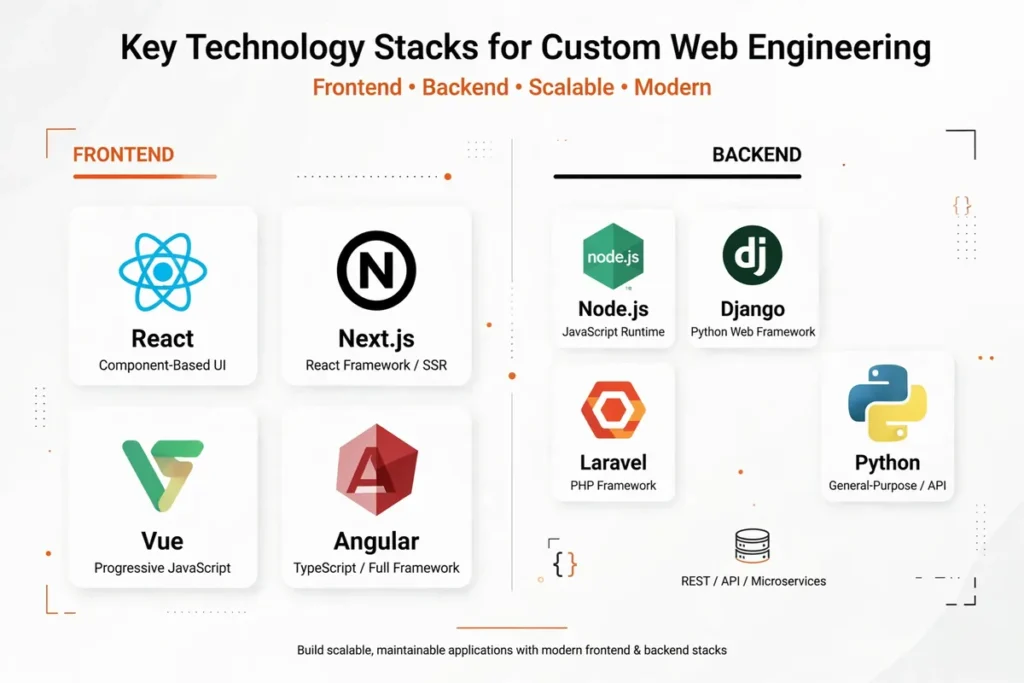
Selecting the proper technology stack forms the backbone of any custom web build. Developers choose specific tools depending on speed requirements, database complexity, and security goals.
Popular Frontend Frameworks
Frontend tools focus on creating fast, responsive, and accessible user interfaces. Popular frameworks include React.js, Next.js, Vue.js, and Angular. These tools enable smooth client-side rendering and interactive web applications.
Scalable Backend Frameworks
Backend technologies manage server logic, user authentication, and database connections. Common choices include Node.js, Express, Django, Laravel, and ASP.NET. Each framework provides unique advantages for handling simultaneous user requests.
How Custom Development Drives SEO Performance
Search engine visibility is directly tied to website architecture and loading speed. Generic template sites often struggle with technical SEO due to bloat.
Clean Code and Technical SEO
Custom sites feature clean HTML structures that search engines crawl efficiently. Developers configure semantic elements, structured schema markup, and custom XML sitemaps directly into the application.
Superior Page Speed and Core Web Vitals
Search engines prioritize platforms that deliver exceptional user experience scores. Custom web applications load minimal assets, resulting in faster Largest Contentful Paint (LCP) and minimal Cumulative Layout Shift (CLS).
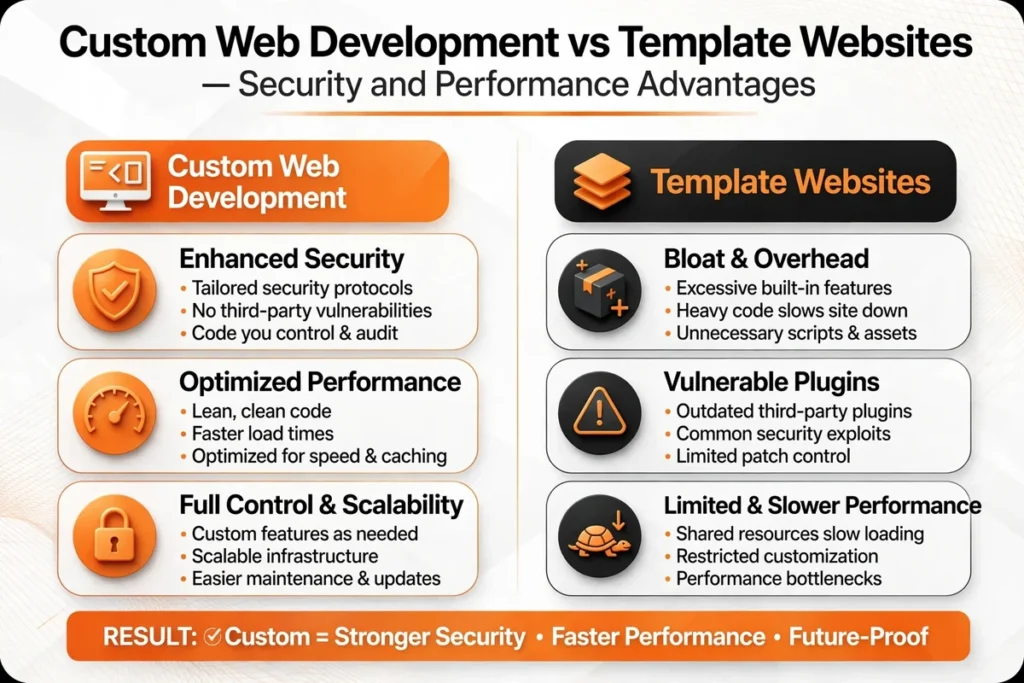
Comparison Table: Custom Web Development vs Template Websites
| Comparison Factor | Custom Web Development | Pre-Made Template Website |
| Initial Investment | Higher upfront cost | Lower upfront cost |
| Long-Term ROI | High scalability & complete ownership | Limited by theme restrictions |
| Page Speed & Performance | Extremely fast, zero code bloat | Slower due to unused plugin code |
| Security Standards | Enterprise-grade, custom protocols | Vulnerable to widespread plugin exploits |
| Design Flexibility | 100% unique brand experience | Constrained by rigid layout blocks |
| Third-Party Integration | Seamless API connections | Relies on buggy, generic plugins |
| Maintenance & Control | Full ownership of source code | Dependent on theme author updates |
For a deeper analysis of costs and trade-offs, check out our custom website vs template website comparison.
Step-by-Step Custom Web Development Process
Building tailored web software requires a disciplined engineering approach. Here is how professional agencies transform business requirements into powerful digital tools.
1. Discovery and Strategic Planning
Engineers map out your business objectives, target audience personas, and technical requirements. This phase produces technical architecture blueprints, database wireframes, and project roadmaps.
2. UI/UX Prototyping
Designers create interactive wireframes and high-fidelity visual mockups. Stakeholders review every screen layout to ensure intuitive navigation before any code is written.
3. Frontend and Backend Engineering
Developers write clean code following strict security and accessibility standards. Frontend assets are integrated seamlessly with custom backend APIs and database endpoints.
4. Quality Assurance and Testing
Automated testing suites and manual QA testers evaluate the application. They run speed audits, security vulnerability scans, cross-browser tests, and mobile responsiveness checks.
5. Deployment and Ongoing Optimization
The finalized platform deploys to a secure cloud server environment. Continuous monitoring ensures high availability, fast load times, and smooth server performance.
Cost Factors and Budgeting for Tailored Projects
Understanding cost drivers clarifies what is custom web development budgeting in practice. Prices vary significantly based on functional scope, system integrations, and compliance needs.
Core Cost Drivers
Primary expense categories include custom UI design assets, complex API connections, and specialized backend architecture. Security audits and regulatory compliance protocols also influence overall project pricing.
Long-Term Value and ROI
While custom software requires a higher upfront payment, it eliminates recurring third-party plugin fees. Over a three-year lifecycle, reduced maintenance costs often outweigh initial development investments.
Security and Performance Advantages of Custom Software
Data protection and site speed are critical reasons why businesses choose custom code. Generic platforms often fall target to automated hacker scripts searching for known plugin flaws.
Enhanced Security Architecture
Custom builds utilize isolated database connections, custom encryption keys, and specialized authentication protocols. This setup dramatically reduces vulnerability vectors compared to public software templates.
Reduced External Vulnerabilities
Because custom systems do not rely on standard third-party plugins, hacker exploits cannot target your site automatically. Your security team maintains total oversight over access points and server protocols.
Actionable Checklist to Determine If You Need Custom Dev
Review this checklist to decide if custom software fits your current business needs:
- You require custom API integrations with internal ERP or CRM software.
- Your industry demands strict compliance standards like HIPAA, GDPR, or PCI-DSS.
- You want a completely unique brand experience that competitors cannot copy.
- Your platform handles heavy user traffic and complex database queries.
- You plan to scale operations without paying monthly plugin subscription fees.
- You need total ownership of intellectual property and source code assets.
Expert Tips to Hire the Right Custom Developer
Finding the right engineering partner determines the success of your custom project. Always review past client case studies and inspect live portfolio applications for performance.
Ensure your chosen developer provides clear code documentation and retains zero ownership rights over your software. Agree on clear milestone deliverables, ongoing maintenance protocols, and post-launch support agreements before signing contracts.
Common Mistakes Businesses Make with Custom Web Development
Many companies encounter project delays because they fail to define clear project scopes. Adding random feature requests mid-development bloats budgets and delays launch schedules.
Another frequent mistake is neglecting post-launch maintenance. Custom web software requires regular server updates, dependency patches, and security monitoring to maintain peak performance.
Frequently Asked Questions
What is custom web development and how does it differ from template development?
Understanding what is custom web development means recognizing that every line of code is written specifically for your business. Template sites rely on pre-designed layouts and heavy third-party plugins. Custom builds offer unmatched speed, tailored user experiences, total code ownership, and robust security scaled to your specific growth needs.
Are custom websites worth it for growing businesses?
Yes, custom websites offer massive long-term value for expanding companies. They eliminate monthly plugin fees, reduce security risks, and deliver faster loading speeds. Investing in custom software allows you to automate complex business tasks, integrate custom databases, and convert more visitors into paying customers.
Do web developers use CMS platforms for custom projects?
Yes, developers frequently use CMS platforms as a headless content store for custom projects. Instead of using bloated pre-made themes, engineers write custom frontend code that pulls content securely via APIs. This delivers fast load speeds while keeping content management simple for non-technical team members.
How long does a custom web development project take?
A typical custom web project takes between 8 to 16 weeks from planning to launch. Simple custom builds may take 6 to 8 weeks, while complex web applications with API integrations can take 20 weeks or longer depending on scope, testing requirements, and technical complexity.
What is custom web application development compared to standard web design?
Knowing what is custom web application development involves focusing on dynamic interactivity rather than static pages. Standard web design presents informational content to visitors. Custom web applications run complex workflows inside browsers, including user logins, live data processing, payments, and custom SaaS dashboards.
Final Thoughts
Grasping what is custom web development empowers you to make smarter technology investments for your business. While pre-made templates offer quick short-term setup, custom software provides the foundation required for sustainable digital expansion.
By investing in clean code, tailored UX, and scalable backend architecture, your brand gains a lasting competitive advantage. Evaluate your current operational needs, choose experienced engineering partners, and build a web platform designed to scale.