
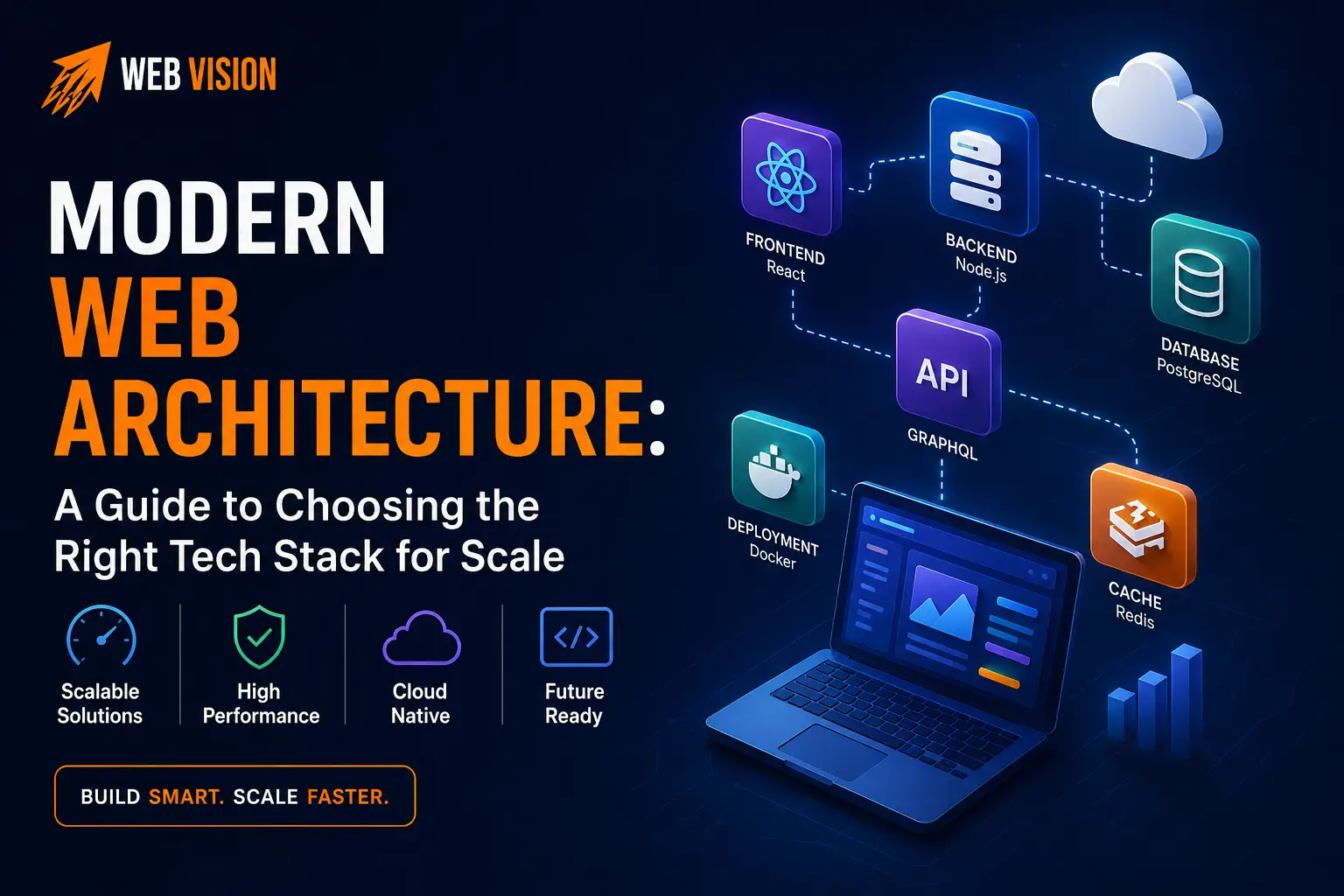
In a highly competitive digital landscape, a generic template website is no longer sufficient to capture and convert market share. Building a robust digital footprint requires a deep understanding of modern web architecture. Choosing the right technology stack merges advanced technical engineering with intent-driven semantic SEO to deliver exceptional page speed, frictionless user experiences, and measurable business growth.
Whether launching an enterprise-grade web application, scaling an optimized e-commerce storefront, or deploying a sleek corporate portal, selecting a custom architectural foundation is critical. To understand how custom engineering brings these architectures to life for your business, explore our dedicated Custom Web Development Services page.

Technical Architecture: Frameworks Engineered for Scale
To secure top organic rankings and ensure long-term stability, modern applications must move away from monolithic, bloated codebases. Implementing decentralized, component-driven modern web architecture keeps initial bundle sizes minimal and drastically reduces server response times.
1. High-Performance Frontend Ecosystems
Building a dynamic user interface requires modern frontend tools that deliver fluid, app-like interactions without compromising page load speeds:
- Component-Driven Frameworks: Utilizing modular frameworks like React allows developers to build reusable interfaces. This keeps code clean, minimizes technical debt, and accelerates future feature updates.
- Hybrid Rendering Platforms: Next.js and specialized meta-frameworks intelligently combine Server-Side Rendering (SSR) and Static Site Generation (SSG) to balance live data accuracy with near-instant loading times.
- Utility-First Styling: Employing modern styling engines like Tailwind CSS eliminates large, redundant CSS files, ensuring sleek designs with zero unused layout bloat.
2. Secure Backend Infrastructure & Real-Time Data Pipelines
Behind every high-converting interface sits a secure, scalable backend engineered to process high-concurrency traffic effortlessly:
- Asynchronous Runtimes: Node.js handles thousands of concurrent connections efficiently, making it the premier choice for modern, data-driven applications.
- Advanced Database Management: Deploying robust database engines like PostgreSQL or MongoDB ensures that user profiles, transactions, and inventories remain secure, consistent, and instantly retrievable.
- Serverless Cloud Infrastructure: Leveraging Supabase or AWS Lambda allows your application logic to scale dynamically during sudden traffic spikes while keeping infrastructure overhead predictable.
Comparing Modern Web Architectures
Selecting the proper framework configuration depends entirely on your specific business goals, operational complexity, and content update frequency.
| Architecture | Ideal Use Case | Core Technical Advantage | Semantic SEO Impact |
| Static Site Generation (SSG) | Corporate Websites, Portfolios, Blogs | Pre-rendered HTML files served instantly via global CDNs. | Perfect. Clean structure allows search engines to crawl pages with zero processing delays. |
| Server-Side Rendering (SSR) | Dynamic E-commerce, Real-Time Marketplaces | Dynamic HTML generation on the server for real-time data precision. | Excellent. Spiders receive fully populated content right on the initial document load. |
| Progressive Web Apps (PWA) | Mobile-First SaaS Tools, Platforms | Native app experiences running directly in standard mobile browsers. | Strong. Higher mobile engagement, offline caching, and decreased bounce rates. |
| Headless CMS / Decoupled | Omnichannel Content Networks | Total separation of administrative backends from various presentation layers. | Highly Adaptable. Yields pristine frontend code completely free of bulky backend plugins. |
Note: Modern search algorithms treat page performance as a primary user experience signal. Understanding how modern web architecture optimizes visual load times can directly improve website user engagement and conversion rates by up to 10%.
Critical Development Pillars for Enterprise Success
Building a successful online presence means balancing technical execution with deep user value. High-ranking web assets focus heavily on three core development pillars within their framework:
Core Web Vitals & Speed Optimization
Slow-loading web pages lose customers before they even see the offer. Optimizing critical performance metrics—such as Largest Contentful Paint (LCP) and Cumulative Layout Shift (CLS) —ensures pages render fully in under two seconds, satisfying both human visitors and search engine crawlers.
Mobile-Responsive UI/UX Design
With the majority of global web traffic originating from mobile devices, a platform must adapt fluidly across all viewports. Prioritizing native touch targets, adaptive asset delivery, and flexible, modern grid systems guarantees a seamless user experience on any device.
Enterprise Security & Data Integrity
Data protection is non-negotiable for online credibility. Modern web architecture implements strict security controls from the very first line of code:
- Rigorous multi-factor authentication protocols.
- Strict Content Security Policies (CSP) to defend against cross-site scripting vulnerabilities.
- Comprehensive end-to-end data encryption across all active transit pathways and storage layers.
The Strategic Deployment Lifecycle
Transforming complex business requirements into an optimized digital platform follows a highly structured, deliberate engineering process.
Phase 1: Architecture Mapping & Discovery
This phase analyzes your target audience, defines search intent, maps out semantic entity relationships, and selects the ideal technology stack required to support your long-term scaling goals.
Phase 2: Interface Prototyping & UX Wireframing
This step focuses on designing high-fidelity, intuitive layouts mapped out to match user search intent, creating frictionless paths toward lead capture and sales.
Phase 3: Agile Code Production & Integration
This phase involves writing clean, type-safe code to build responsive interfaces, while seamlessly connecting them to secure backend databases and custom APIs.
Phase 4: Performance Auditing & Deployment
Before going live, the platform undergoes comprehensive load testing, optimization for Core Web Vitals, and strict security validation to guarantee immediate market readiness.